

The grid connection was the bottleneck. So we took it out of the loop.
Conventional fast chargers pull their full output straight off the grid. Ours don't. Here is how an SAEV station is built, and why it changes which sites are possible.
The station
From
10 kW in. 120 kW+ out.
A 272 kWh SolarMD battery fills slowly from a small grid connection, then releases full fast-charging power the moment a car plugs in.
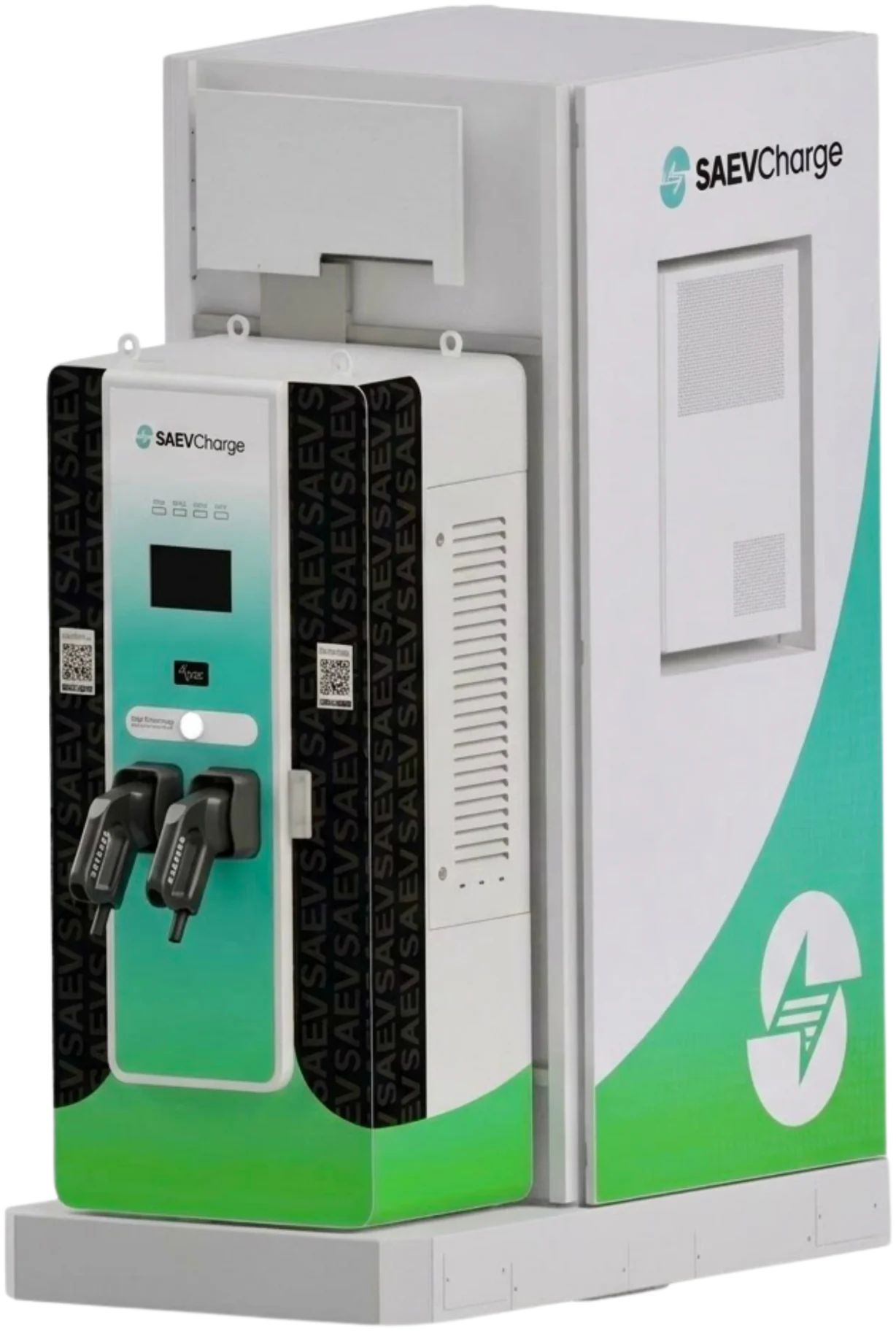
Grid inFrom 10 kW
272 kWh SolarMD batterySolarMD battery
DC-DC dispenser, no AC conversionNo AC conversion
Out to the car2 × CCS2, 300 A each
Architecture
One shared DC bus.
Energy comes in slowly, from the grid or the sun. The battery holds it. DC-DC dispensing sends it to the car at full power.
Into the battery, slowly
Out to the car, at full power
Grid / Solar in
From 10 kWSolar optional
Front end power
Rectifieror hybrid inverter
Storage
272 kWh LFPSolarMD
DC-DC Dispensing
No AC conversion
2 × CCS2
120 kW+300 A per connector
Into the battery,
slowly
Out to the car,
at full power
Grid / Solar in
From 10 kWSolar optional
Front end power
Rectifieror hybrid inverter
Storage
272 kWh LFPSolarMD
DC-DC Dispensing
No AC conversion
2 × CCS2
120 kW+300 A per connector
The energy edge
We choose when to buy electricity.
A grid-tied charger buys energy when a car arrives, which on a winter weekday evening is the most expensive electricity Eskom sells. Our stations charge the battery off-peak and standard only. Never peak. The battery makes the tariff a decision instead of an accident.
Leveraging time-of-use, and sparing the grid when it matters most.
- Charging. The battery tops up through the day and fills overnight.
- Standard and off-peak
- Never. The battery carries the station through.
- Peak
Eskom's weekday time-of-use periods in the high-demand season, June to August.
Why it matters
Built for the grid we actually have.
The connection no longer sets the speed.
120 kW+ out of a 10 kW supply. The battery decides how fast the car charges. The site decides how fast the battery refills.
Grid in
10 kWCar out
120 kW+Power outages are a non-event.
The station is islanded by design. Both bays stay live through an outage. The driver sees nothing.
GridChargingLiveThe host's demand stays where it was.
Grid draw is slow, smooth and controllable. On a time-of-use tariff, charging off-peak adds nothing to the site's chargeable demand. We put that in the agreement.
Grid draw across a day, per station Fewer conversions, fewer losses.
DC solar into a DC battery into a DC car. No round trips through AC.
Battery chargerGrid connectionBatteryDCDC-DC chargerNo AC conversionCarDCDC in, DC out: up to 10% more efficient than a traditional BESS-integrated AC-DC charging station.
Solar carport
Optional. Sensible where it fits.
A PV carport shades the bays and feeds the battery directly on the DC side. Surplus flows into the host's building at an agreed rate, well under what most sites pay Eskom at two in the afternoon. Sized per site.
Software
Bespoke monitoring and control.
SAEV's in-house developed CSMS integrates natively with MyPower24, SolarMD's EMS, for advanced control over energy management and optimisation. Paired with SAEV's proprietary ILB (Intelligent Load Balancing), it shares every available kilowatt across the chargers as conditions change, and never a kilowatt more. OCPP 1.6J and 2.0.1 as standard.
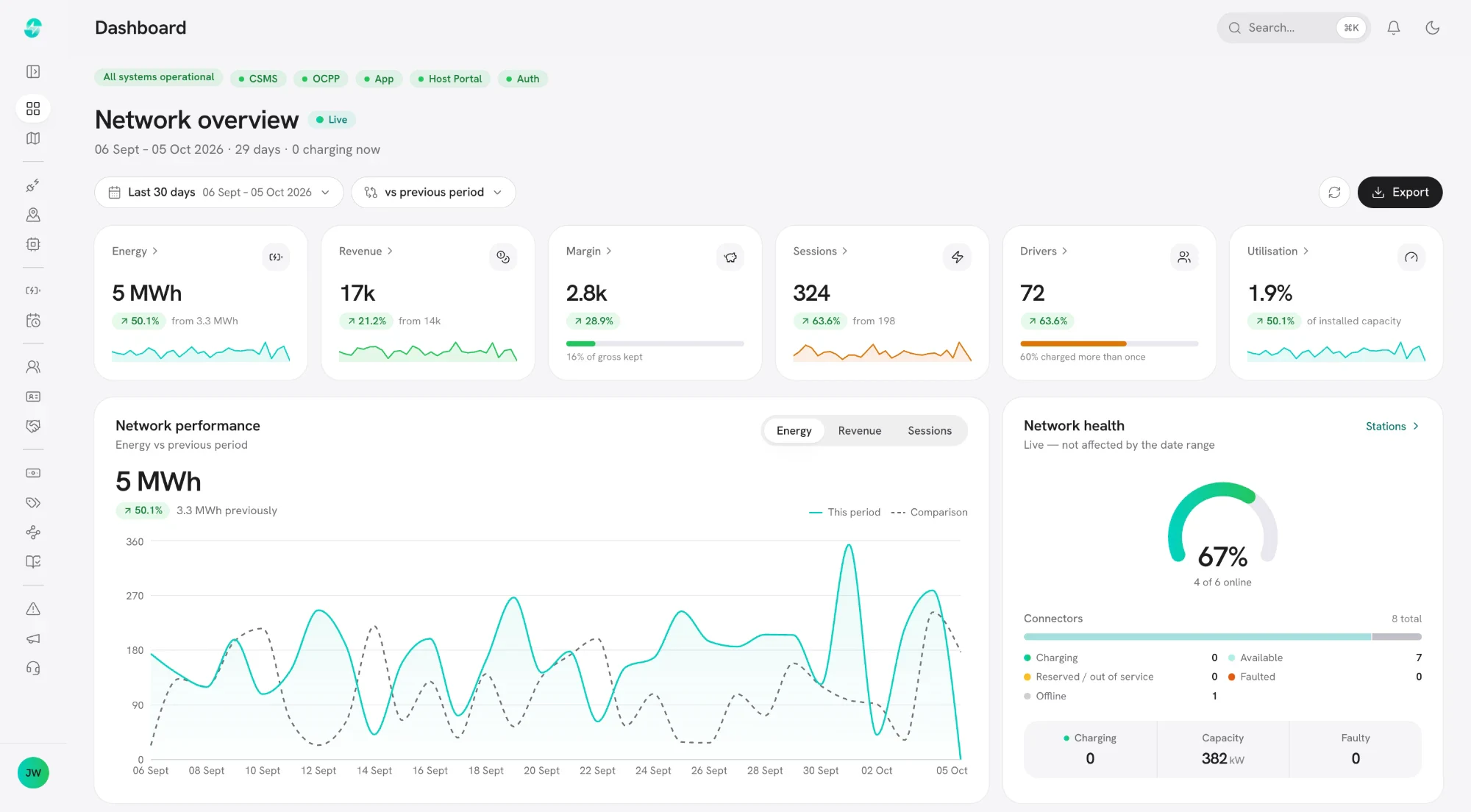
Driver data never leaves the country. That's how it's built, not a clause in a contract.
Metering
Four meters per site. Three different numbers.
Energy bought at the grid meter and energy sold at the plug are not the same number. Our settlement engine never treats them as one.
Grid import, split by time-of-use period.
What we owe the host.
Solar generation.
The renewable fraction, and the surplus credited to the host.
Energy delivered at the connector.
What the driver pays for.
Battery telemetry. State of charge, cycles, temperature.
Never a billing source.
Specifications
Tech specs.
- Charging output
- 120 kW+ DC
- Connectors
- 2 × CCS2
- Battery
- 272 kWh, LFP, SolarMD HV outdoor cabinet
- Grid connection
- From 10 kW
- Grid charging window
- Off-peak and standard only, never peak
- Outage behaviour
- Both bays remain live
- Solar
- Optional DC-coupled carport, surplus to host
- Footprint
- 3 bays, re-striped to 2 charging bays with the unit centred
- Protocol
- OCPP 1.6J and 2.0.1
- Backend
- In-house CSMS, self-hosted in South Africa
- Authentication
- App · QR · RFID/NFC tap